4.7.11

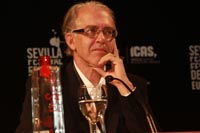
Festival de Moscu. Jurado en la alfombra verde....Geraldine Chaplin y javier Martin-Dominguez


El jurado del 33 Festival de Moscu, el dia inaugural, en la alfombra verde....
Karoly Maxx, Amos Gitai, Geraldine Chaplin, Javier Martin-Dominguez y Nicolai Dostal.
Javier Martin-Dominguez y Geraldine Chaplin

2.7.11

la pelicula española LAS OLAS, gana el festival de Moscú

EL DRAMA ESPAÑOL ‘LAS OLAS’, PRINCIPAL TRIUNFADOR DEL FESTIVAL DE MOSCÚ

El drama histórico español Las olas, de Alberto Morais, que se centra en las reflexiones de un anciano sobre la Guerra Civil Española, recibió el Jorge de Oro, el principal premio de la XXXIII edición del Festival Internacional de Cine de Moscú.
El filme, que es el debut cinematográfico del realizador español, cuenta la historia de un anciano que empieza un viaje a una pequeña ciudad fronteriza con Francia que hace 60 años era la última parada de los miles de refugiados que huían de una España sacudida por una sangrienta guerra civil. En su travesía, que hace en su antiguo coche, recuerda el pasado, los años en los que estuvo preso en un campo de concentración e intenta responder a las preguntas que durante toda su vida no le han permitido estar en paz.
El protagonista de Las olas, el actor español Carlos Álvarez-Nóvoa, recibió el premio Jorge de Plata al mejor papel masculino. Anteriormente esta película también fue galardonada con el premio de la Federación Internacional de la Prensa Cinematográfica (FIPRESCI) “por su síntesis de sencillez y fuerza emocional”. Cabe mencionar que esta edición del festival ha estado marcada por una amplia presencia del cine español. Un total de nueve cintas españolas formaban parte de su programa.
“Siento mucha humildad y mucho orgullo”, dijo Alberto Morais a RT tras recibir el premio. “Para mí fue una sorpresa por todos lados. Pero creí que si algún premio podíamos tener, era por labor de Carlos Álvarez-Nóvoa que ha hecho un trabajo excepcional en la película y que ha hecho que la película sea como es ahora. Al final nos han dado el máximo premio, el premio al mejor actor y el de FIPRESCI. Creo que no se puede pedir más”, confesó Morais.

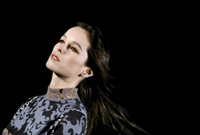
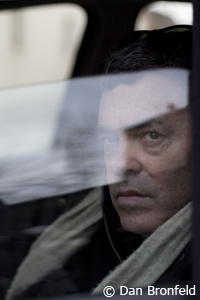
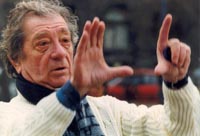
El jurado estaba formado por la actriz Gerladine Chaplin, los directores Amos Gitai de Israel ,Karoly Makk de Hungria , Nicolai Dostal de Rusia y Javier Martín-Dominguez, director del Festival de cine de Sevilla (España).
 La famosa actriz británica Helen Mirren, que tiene antepasados rusos, cerró el festival con la película La deuda, del realizador estadounidense John Madden, y fue galardonada con el premio especial Konstantín Stanislavski “por alcanzar las mayores cumbres de maestría artística”.
El Festival Internacional de Cine de Moscú es el único festival cinematográfico ruso que tiene una larga historia y un amplio reconocimiento mundial. Se celebra anualmente en junio en la capital rusa y está considerado el segundo más antiguo del mundo, después del Festival de Venecia. La primera edición de este certamen se celebró en 1935 y estuvo encabezada por el ilustre cineasta ruso Serguéi Eizenstéin.

Articulo completo en: http://actualidad.rt.com/tiempolibre/cultura/issue_26324.html

28.6.11

IÑIGO, EMBAJADOR POP


El nuevo universo pop de los años sesenta tuvo en la música su discurso universal de renovación. Desde Londres como epicentro, las canciones y sus creadores forjaron  un nuevo estilo de vivir y soñar. Era el tiempo de los Beatles y los Stones, del hippismo, la liberación femenina,…todo envuelto en un nuevo diseño y un nuevo lenguaje.  Insuflar en  la rancia España del  franquismo estos nuevos aires, fue tarea de gente inquieta que tenia en el viaje su manera de vivir libre y en la música el alambre en el que subirse al nuevo sueño. Un chico de amplio bigote nacido en Bilbao fue uno de los mas claros introductores de este movimiento imparable para metérnoslo por nuestros ojos y oídos. Jose Maria Iñigo fue el gran embajador pop por tierra, mar y aires; por prensa, radio y televisión. Lo adolescentes de la época devorábamos Mundo Joven, la revista en la que se reunió una cuadrilla inigualable de talento. Allí estaban Manu Leguineche,  Carlos Alvarez Novoa, Jesús Picatoste, Román Orozco,….y el bigotudo Iñigo. Ilustraba ba sus crónicas con una foto en la que una boa se le enroscaba al cuello. Hizo una radio pop vibrante y cercana, y dio el salto a la televisión. Ultimo grito- con dos gigantes de la creación a su lado, Iván Zuluéta y Pedro  Olea -no tiene parangón en la época. Después llegarían sus “talk shows” como Directísimo y Estudio abierto, en los que los españoles entrevistados hacían su rito de ingreso en el catalogo del “Spanish pop”. Aquella década prodigiosa quedará asociada a él como icono televisivo del momento. Por eso le rinde ahora homenaje la Academia de la Televisión y por eso Iñigo es nuestro pasaporte a aquel tiempo pasado mejor. En una taberna de Copenhague, donde fuimos a celebrar los cincuenta años del festival de Eurovisión, recordamos con nostalgia provechosa esta biografía tan cumplida. Al rato, el maestro volvía al  micro para retrasmitir con gusto y sabiduría medio siglo de éxitos musicales. El también era parte de la banda sonora de nuestra vida. Con solo oírle y verle,  volvemos a vivir y sentir nuestro gran momento pop.

23.6.11

MOSCU INTERNACIONAL FILM FESTIVAL. 23 junio - 2 julio. Jurado


23.06 - 02.07.2011

Main competition Jury

GERALDINE CHAPLIN
actress
She was born in Santa Monica, California in the family of the famous actor Charles Spencer Chaplin and his wife Oona O’Neill (daughter of playwright and Nobel laureate, Eugene O'Neill). Chaplin graduated from a boarding school in Switzerland where she became fluent in French and Spanish. When Chaplin was eight years old, she appeared uncredited in her father's film Limelight (1952), but dreamt of a ballet at the time. She educated in the Royal Ballet School in London and later spent some time on a ballet stage in Paris.

Her acting career launched again in 1965 when director David Lean casted her for the role of Tonya, the main character's wife in his adaptation of Doctor Zhivago. For this role Chaplin was nominated for a Golden Globe for the first time; in 1967 she has also made her debut on Broadway stage. Today Geraldine Chaplin is an acknowledged star of world cinema: throughout her career the actress has been working not only in USA, but in Spain, France and United Kingdom, collaborating with such famous directors as Jacques Rivette (Noroît (1976) and L'amour par terre/ Love on the Ground (1984), Alain Resnais (La Vie est un roman/ Life Is A Bed of Roses (1983) and I Want to Go Home (1989), Robert Altman (Nashville (1975), Buffalo Bill and The Indians, or Sitting Bull's History Lesson (1976), A Wedding (1978), Martin Scorsese (The Age of Innocence (1995), Franco Zeffirelli (Jane Eyre (1996) and many others. One of the most significant page of Chaplin’s biography is her long-term collaboration with Spanish director Carlos Saura – she participated in his famous films Ana y los lobos/ Ana And the Wolves (1973), Cria cuervos / Raise Ravens (1975), Elisa, vida mía / Elisa, My Love (1977), Los Ojos vendados/ Blindfolded Eyes (1978).

In 1992 she took part in Richard Attenborough’s film Chaplin about her famous father – Geraldine played the part of the actor’s mother, Hannah Chaplin and once again was nominated for a Golden Globe. Up to date Chaplin’s filmography consists of more than hundred roles. One of her most notable recent roles was in Juan Antonio Bayona’s mystery thriller El Orfanato/ The Orphanage (2007), where the actress has once again demonstrated her talent of creating a remarkable character even in a small role – for a part of a psychic Chaplin received several awards. Among other multiple prizes that Geraldime Chaplin has ever received are prestigious Goya Award for En la ciudad sin límites / The City Of No Limits (2002), prizes at film festival in Munich, Paris, Best supporting Actor for ¿Para qué sirve un oso? (2011) in Festival de Malaga, Lifetime Achievement Award of Malaga Spanish Film Festival, the French Republic state award «Ordre des Arts et des Lettres», Officier grade, and award of the king Juan Carlos I «Medalla de Oro al Merito en las Bellas Artes».


AMOS GITAI
director

To date, early 2010, the work of the filmmaker Amos Gitai includes over 80 titles created over 38 years. But over and above his output and longevity, his entire body of works, which also includes video productions, stage sets and books, is remarkable for its diversity. He was born in 1950, the first generation of children following the creation of the state of Israel, a generation which was subsequently shaped by the great anti-establishment youth movements of the 1960s. His work as a professional filmmaker was launched with a film on the reconstruction of a house: HOUSE (1980) is a documentary which, in the unique location of a building site in a small street in Jerusalem, depicts with vigour and sensitivity much behind the lives, dreams and suffering of Israelis and Palestinians. Bayit / House (1980), A House In Jerusalem (1998) and News From Home, News From House (2006) are the three elements of this documentary trilogy, the same genre as the three Wadi films (1981, 1991, 2001), the trilogy on Israeli politico-military practices - Yoman sadeh / Field Diary (1982), Te'atron hahaim / Give Peace A Chance (1994), The Arena Of Murder (1996), the trilogy on the procedures of global capitalism – Ananas / Pineapple (1983), Bangkok-Bahrain / Labour for sale (1984), Orange (1998) and the trilogy on the reemergence of the extreme right in Europe - In The Valley Of The Wupper (1993), In The Name Of The Duce (1994), Queen Mary ’87 (1995). But he also produced fictional trilogies: the exile trilogy Esther (1985, Grand Prize of Toronto FF), Berlin-Yerushalaim (1989, Special Mention at the Venice FF, Special Prize of the Jury at Istanbul FF), Golem, l'esprit de l'exil / Golem, The Spirit Of Exile (1991), the cities trilogy - Zihron devarim (1995), Yom Yom (1998, Best Israeli Feature Film award at Jerusalem FF), Kadosh (1999, Palme d'Or nomination, Silver Screen Award at Singapore FF), the trilogy on historical events decisive for Israel – Kippur (2000, Palme d'Or nomination), Eden (2001, nomination for a Golden Lion award at Venice FF), Kedma (2002, Palme d'Or nomination), and the trilogy on borders - Promised Land (2004, CinemAvvenire' Award at the Venice FF), Free Zone (2005, Palme d'Or nomination), Disengagement (2007). Israeli filmmaker and citizen of the world, Amos Gitai resides in Haifa and Paris but lives and works throughout the world. He is now one of the most respected filmmakers in the international arena and in his work he constantly explores new narrative methods and styles, always associated with contemporary reality, even when the script takes a detour through a historical or mythological past.


NIKOLAY DOSTAL
director

Nikolay Dostal was born the 21st of May in 1946 in Moscow, in the family of the director Nikolay Vladimirovich Dostal. In 1970 he graduated from the journalistic department of the Moscow University, and started working as a second-unit director on the Mosfilm Studios. In 1981 Dostal graduated from Georgiy Danelia’s workshop of the Higher Courses for Directors and Scriptwriters, and one year later made his directorial debut with the film Ojidaetsya poholodanie i sneg. It was followed by such features as Chelovek s akkordeonom/ Man with an Accordion (1985), Shura i Prosvirnyak/ Shura and Prosvirnyak (1987), Ya v polnom poryadke/ I'm Alright (1989). International success came to Dostal with his next feature film, Oblako-ray/ Cloud Heaven (1990), which has received many prizes both in Russia and worldwide, including Silver Leopard at Locarno film festival and award of the National film festival Kinotavr. Among his other most famous directorial works are films: Malenkiy gigant bolshogo seksa/ A Small Giant of Big Sex (1992), Melkiy bes (1995), Politseiskiye i vory / Cops and Robbers (1998), Kolya – Perekati-pole (2005, the first prize of the Film Festival “Okno v Evropu”), Petya po doroge v Tsarstvie Nebesnoe / Pete on the Way to Heaven (2009, Golden George of the 31st MIFF, nomination for Golden Eagle Award of the National Film Academy for the Best Film), and popular TV-series: Grazhdanin nachalnik (2001), Stilet (2003), Shtrafbat / The Penal Battalion (2004, Russian TV Academy Award TEFI, Reflet d'Or of the 11 Geneva TV films Festival Cinema tous Ecrans for the best TV-series ) and Zaveshchaniye Lenina (2007, Golden Eagle Award for the Best TV-series , Nika Award for artistic TV achievments . In 2008 Nikolay Dostal was praised with People’s Artist title.


Károly MAKK
director

Makk was born in 22.12.1925 in Berettyóújfalu, Hungary. Being the son of the projectionist, Makk got the chance to get to know cinema from his childhood. He came to work to the film studio Gunniya in the summer of 1944. Even before he entered the Academy of Performing Arts he was already keen on cinema, having worked as cameraman assistant, trainee-editor, director assistant and created shorts for cine-magazines. In the same time Makk was studying in the university (first in Budapest and then in Debrecen) where he was in the department of art history, philosophy and aesthetics. In 1946-1950 he studied in the Academy of Performing Arts, working at the same time in cinema. While being the student, he met with the director Géza Radványi – Makk worked as an assistant director to him on the shooting of his film Somewhere in Europe (1947).

In 1949 Makk made his first film Uttorok, which was shattered by the studio before it was finished. Also Makk was fired from the studio, and in the early 50s he had to work as a tractor driver. He later came back to cinema and joined the Hungarian Film Production Company (MAFILM) in 1952 as a co-director.
He directed his first feature film, Liliomfi in 1954. Later Makk made a sort of his own trademark out of combining lyrics and grotesque, which can be seen in such films as Catsplay (1974, nomination for Oscar), A Very Moral Night (1977), etc. His film Ward No. 9 (1955), which deals with social issues, reveals the influence of Italian neorealism and the director’s ability to depict social environment and characters. His dark melodrama The House Under the Rocks (1958) received the Prize of International Film Festival in San-Francisco. The following features, such as The Brigade No. 39 (1959), The Fanatics (1961), Paradise Lost (1962), The Last But One (1963), were the masterpieces of its time, in which the director’s style was formed and shaped. Makk’s talent in creating atmosphere and social environment can be seen in his masterpiece, Love (1970), which received multiple awards, including Special Jury Prize of Ecumenical Jury at Cannes Film Festival, Golden Medal in Varna FF, and the Prize for Best Actress in Chicago. One of the most significant works of the director is also the feature film Another Way (1982), which received the FIPRESCI Prize in Cannes, as well the Prize for Best Actress, and Grand-Prix of Figueira da Foz Film Festival.

Makk depicted the time, following the defeat of Hungarian uprising in 1956, in his film Hungarian Requiem (1990). In Hungarian Pizza - his part of the film-omnibus Love Each Other (1995) – Makk showed his vision on the contemporary social relations. His film The Gambler (1997) is famous for brilliant acting work (the actress Jodhi May was awarded at the Troia Film Festival), as well as for its unique combination of the scenes from the original novel and the episodes of Fyodor Dostoevsky’s life. Makk’s nostalgic melodrama A Long Weekend in Pest and Buda (2003) participated in competition of the 25th Moscow Film Festival.

Since 1951 he has been lecturing at the Academy of Performing Arts, where he is now professor. In 1991 he was the speaker of the Democratic Charta. Since 1993 he has been a member of the Széchenyi Academy. He is a professor at the Academy of Theatre and Film Art, member of the Hungarian Academy of Art as well as of the European Film Academy. Makk is the winner of numerous prestigious awards. He has received Lifetime Achievement Award at Figueira da Foz IFF (1986), Hungarian Film Week (1994) and Karlovy Vary IFF (2001).


Javier Martín-Domínguez
festival director, director, writer

Javier Martín-Domínguez was born in Spain in 1954. He is the director of the Seville European Film festival (SEFF) and has developed a career in journalism, television and film, as director, producer and scrip-writer. He earned a degree in Communications and Journalism at the University of Madrid and a Master on Media and Film at The New School University of New York.

Martín-Domínguez has pursued a very successful career on Spanish TV. In 1976 he began to work for TVE – the main group of television in Spain. Through the following years he experienced a very successful career on television, where he became director of development and thematic channels at the Spanish Public television, and then in 2005 - secretary general of TVE. He also created TV formats for different networks in Spain.

He received the Principe de Viana award for audiovisual creation and the Internaional Jornalism prize Cirilo Rodriguez. He was a foreign correspondent for Spanish public radio and television in New York for a decade, and Far East correspondent, based in Tokyo, for the Barcelona newspaper La Vanguardia. He also was the editor in chief of the magazine Comunicacion XXI, and currently writes a weekly column about cinema and media on the Spanish press.

Javier Martín-Domínguez is also the writer and director of films. He had directed and produced numerous documentaries: More than a witness, The XXI century museum, The Last Word, A place to dream, Madrid-USA, etc. His biopic of the American writer Paul Bowles and his wife Jane Auer Bowles, Traces of sand and wáter has been shown at the Cinema du Art festival in París, Amsterdam, Boston, Tangiers and other festivals. With his fiction film De la piel pa´ dentro/ Within the skin he won the first prize of the Pamplona Festival. Other titles written and directed by him are Art East, Improvisators of Illusions (both shot in New York) and Eclipse. He also directed the promotional film of the Universal Exposition of Seville in 1992.

In 2008 Javier Martín-Domínguez became the director of Seville European Film Festival, which launched in 2004 and has been rapidly consolidating as a local event with the ambition to become a key Southern reference point for Euro filmmaking. Martín-Domínguez’s assignment for the role of its director, contributed in building on Seville Film Festival’s reputation as a solid and wide-ranging Euro showcase. 

21.6.11

CINE Y MUJERES. ¿Donde están ellas?

¿DONDE ESTAN ELLAS?
Hace escasa fechas, recién cumplidos sus 94 años, ha dicho adiós la última surrealista. La pintora y escritora Leonora Carrington fallecía en México después de una larga y fructífera vida, que la llevó de formar parte del grupo de los Breton, Max Ernst y Duchamp, a ser internada en un psiquiátrico en Santander tras su huida de los nazis en el año 40. No fue la única que corrió esa suerte del 'encarcelamiento del alma'. Para las chicas rebeldes de la época, las que simplemente querían ser o tener los mismos derechos que sus hermanos, en ocasiones la familia y la sociedad recurría a la solución del manicomio. Se las hacía simplemente invisibles. Los tiempos han cambiado mucho para el acceso de las mujeres a la que Enzesberguer llama ¡la industria de la conciencia', la de los medios de comunicación. Pero su presencia en el altavoz fundamental de la sociedad sigue siendo muy limitada.

Son todavía escasas las directoras de cine, las guionistas o productoras que consiguen pisar fuerte en la industria. Existir, existen. De las ya legendarias Pilar Miró o Josefina Molina, a las Isabel Coixet, Iciar Bolláin, Helena Taberna, Chus Gutierrez, Mercedes Álvarez. Destacan en la producción por su capacidad de orden y trabajo. Pero falta un empujón en la industria. No ya por paridad, sino para aprovechar su nueva visión y talento creativo. CIMA, la asociación de mujeres cineastas y del audiovisual, sigue alertando de este menosprecio, con acciones claras y hasta divertidas, como con la convocatoria de sus premios 'Esquenohay'. Entre lo positivo destacado, la recuperación de la historia de Pilar Miró por Diego Galán en la serie Imprescindibles de La Dos, y los festivales de Cuenca y el europeo de Sevilla, donde demostramos que las mujeres europeas -la Susanne Bier que ha ganado el Oscar con 'Un mundo mejor' o la Jessica Hausner de Lourdes o la gran productora Vibeke Windelov- tienen un peso específico en el cine del continente, al que España se tiene que sumar sin falta. Mientras tanto aquí nos estamos perdiendo la mitad de la historia.


18.6.11

EL FESTIVAL DE SEVILLA, PREMIO DE CIMA


Los premiados de este año con los galardones 'Esquenohay' y 'Haberlashaylas'

CIMA PREMIA AL FESTIVAL DE CINE EUROPEO DE SEVILLA.


Susanne Bier, Premio SEFF 10 y Oscar por En un mundo mejor


Los premios de la Asociación de Mujeres cineastas y del Audiovisual, CIMA Haberlashaylas sirven para destacar “los medios, festivales y demás que sí tienen en cuenta la obra de las mujeres”.
En esta ocasión, se han concedido a la Semana Internacional de Cine de Cuenca Mujeres en Dirección, el Festival de Cine Europeo de Sevilla, , y el documental ¿Quién fue Pilar Miró? de Diego Galán.  El director del Festival de Sevilla, Javier Martín-Domínguez, recibió el premio de manos de la realizadora Josefina Molina.

En la última edición de SEFF, la danesa Susanne Bier obtuvo los premios a mejor dirección y guión por EN UN MUNDO MEJOR, que posteriormente ganó el Oscar a mejor película extranjera. Rindió homenaje a la histórica directora Marceline Loridan-Ivens y a la presidenta de la European Film Promotion y de Holland Films, Claudia Lansberger. Todos los jurados estuvieron presididos por mujeres. En la edición precedente, hubo una mayoría de mujeres directoras en la sección oficial, que ganó LOURDES, de la directora austriaca Jessica Hausner.


CIMA PREMIA AL FESTIVAL DE SEVILLA

No a las mujeres invisibles en el cine

Los premios Esquenohay de la Asociación de Mujeres Cineastas y de los Medios Audiovisuales (CIMA) denuncian la invisibilización de las mujeres en el audiovisual. Por CINEMANÍA

Un tema recurrente en las tertulias cinéfilas de bar: la poca cantidad de mujeres cineastas que hay. Dependiendo de la profundidad con la que se plantee la cuestión, saldrán los nombres de siempre (Maya Deren, Leni Riefenstahl, Agnès Varda, Vera Chytilová, Claire Denis, Kathryn Bigelow o Sofia Coppola) e, inmediatamente después, se pasará a despellejar los tópicos habituales sobre el cine femenino, refrendados por este o aquel título. Desde hace seis años, la Asociación de Mujeres Cineastas y de los Medios Audiovisuales (CIMA) trabaja para que esa percepción cambie.
Dentro de esa línea de actuación, hoy celebran la jovial ceremonia de entrega de los premios Esquenohay, destinados a llamar la atención de los medios de comunicación, festivales de cine e instituciones que durante el último año hayan contribuido especialmente a invisibilizar a la mujer en el cine y la televisión. CINEMANÍA ha charlado con la presidenta de la asociación, Inés Paris (guionista de televisión y directora de A mi madre le gustan las mujeres, Semen, una historia de amor y Miguel y William) sobre los objetivos de CIMA y estos peculiares premios.
Por un lado están los antipremios Esquenohay de bronce, que “denuncian o destacan cómo la obra cinematográfica de mujeres es olvidada o ignorada”, explica Paris. A juicio de CIMA, así ha ocurrido este año con la pieza del programa de TV Días de Cine Balance del cine español de la década (2001-2011), que “no menciona a ninguna mujer directora, ni película dirigida por una mujer, en un reportaje en el que se analiza el cine español de los últimos diez años”; el Festival de Cine Español de Málaga, por “no programar en su sección oficial del año 2010 ni una sola película dirigida por una mujer, ni otorgar un solo premio honorífico, ni programar homenaje alguno a una mujer”; y los galardones Mestre Mateo de la Academia Galega do Audiovisual, que no han concedido ningún premio de Honra (Fernando Rey) ni Revelación (Chano Piñeiro) a ninguna mujer desde su creación en 2002.
Los Esquenohay se consideran como un aviso para sus receptores, “una forma de abrir el debate”, nos dice la cineasta. Las modalidades de plata y de oro se guardan para futuras entregas en las que haga que hacer notar una reincidencia en el comportamiento de los agraciados.
Pero no todo son quejas, los premios (estos sí) Haberlashaylas sirven para destacar todo lo contrario, “los medios, festivales y demás que sí tienen en cuenta la obra de las mujeres”. En esta ocasión, la Semana Internacional de Cine de Cuenca Mujeres en Dirección, el Festival de Cine Europeo de Sevilla  dirigido por Javier Martín-Domínguez, y el documental ¿Quién fue Pilar Miró? de Diego Galán.
Aunque Paris reconoce que en España se ha trabajado mucho por la promoción de la mujer en el audiovisual, cree que todavía falta mucho camino por recorrer: “hay muchas mujeres en el sector, pero sobre todo en la base de la pirámide profesional (muy en concreto en peluquería, maquillaje, vestuario), no en los puestos con mayor poder de decisión (producción, guión, realización)”.
Desde CIMA trabajan para que eso cambie (“creemos que la presencia de tan pocas mujeres determina los contenidos del cine, restándole pluralidad y variedad”), y añaden un dato tan significativo como preocupante: “cuanto más potente es una industria universal, más excluidas están las mujeres".

SEVILLA premió el pasado año a Susanne Bier,  mejor direccion y guión por EN UN MUNDO MEJOR, que ganó este año el oscar a mejor película extranjera.
Tambien galardonó a Claudia Lansberguer, premio de la Industria, y Marceline Loridan Ivens por toda su carrera.

Días de Tokio. Memorias de cuarenta años…

Distintos y distantes como parecen los japoneses, era recurrente, tras vivir allí un tiempo, que me preguntasen: “¿Y pudiste hacer amigos?”....